
Run workloads across providers without redesigning architecture.
Ecosystem
CLYSO Multi Cloud Broker
Multi-Cloud Management Without Architecture Lock-In
Multi-Cloud Control Layer
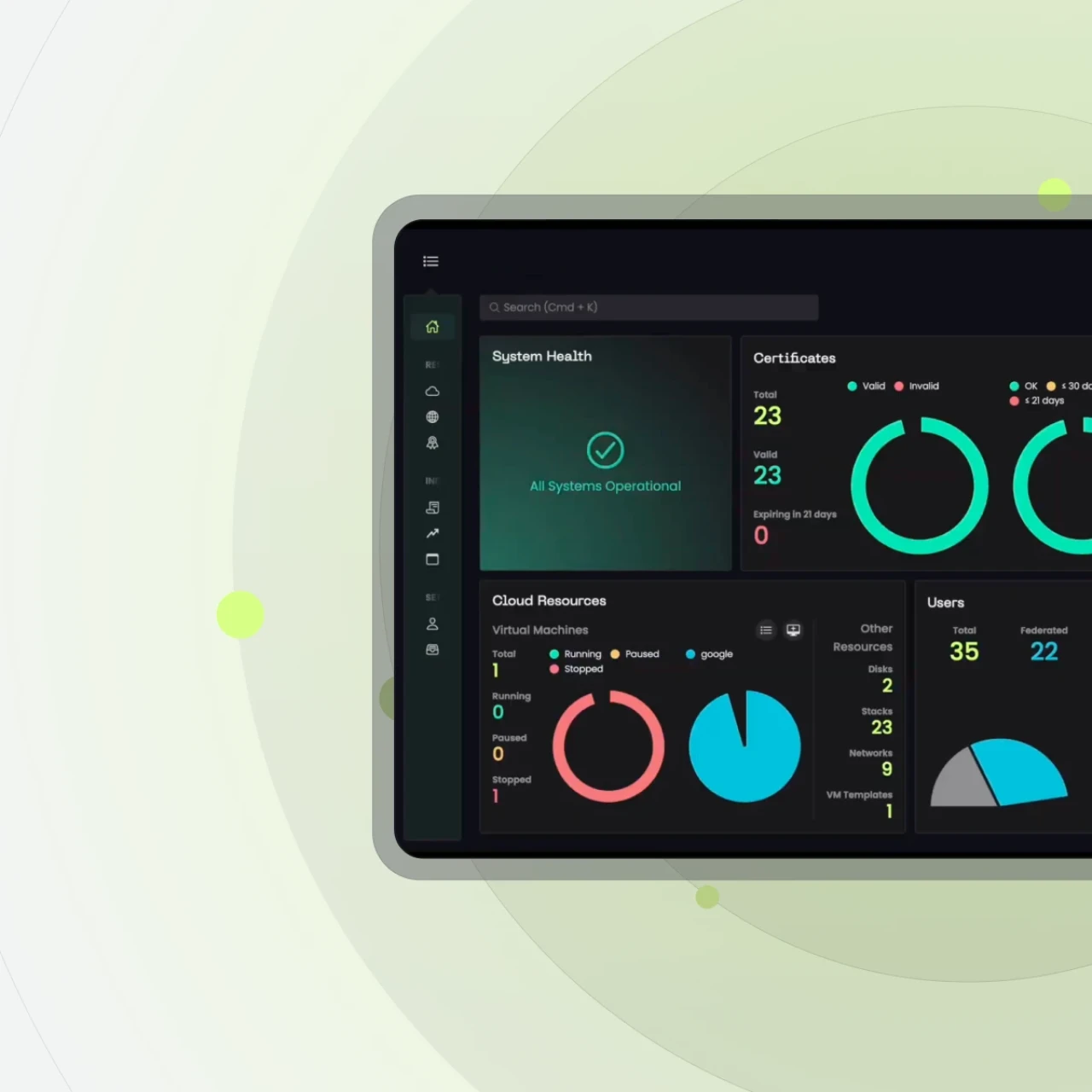
Deploy, manage and migrate workloads across providers with consistent governance and operational flexibility.
Core Value
Unified Operations
Manage deployment, access control and monitoring from a single control layer.
Cost Transparency
Compare infrastructure options across providers and optimise cloud spend.
How It Works
1. Abstract Providers
A unified API removes provider-specific complexity.
2. Control from One Layer
Deploy, monitor and manage resources centrally.
3. Move Workloads Safely
Shift workloads between environments without operational disruption.
Core Capabilities
Unified Multi-Cloud API
Operate infrastructure across providers using one consistent interface.
Template-Based Deployment
Standardise machine and stack configurations for repeatable rollouts.
Policy & Access Governance
Apply RBAC and infrastructure constraints aligned with enterprise requirements.
Cost Intelligence
Compare stack pricing across providers in one place.
Central Monitoring & Audit
Track resources, events and activity from a single control plane.
Adaptive Monitoring
Focus monitoring on relevant signals to reduce noise and operational overhead.
Business Outcomes
Frequently Asked Questions
These are the questions we hear most often about Multi Cloud Broker.
Features
What is the Multi Cloud Broker?
The Multi Cloud Broker is a control layer that allows organisations to deploy, manage and monitor workloads across multiple public and private cloud providers through a unified interface.
How is this different from cloud provider tools?
Cloud provider dashboards manage a single environment. The Multi Cloud Broker adds an abstraction layer that standardises operations across multiple providers.
Do we need to change our architecture?
No. Existing workloads can usually be managed without redesign. The broker abstracts provider differences while keeping architectures intact.
How does this help avoid vendor lock-in?
A provider-agnostic API keeps operational processes independent from specific cloud implementations, enabling flexible infrastructure decisions.
When does a Multi Cloud Broker make sense?
It is most valuable when organisations operate multiple cloud environments, plan migrations, or require consistent governance across providers.
Part of the Ceph Open Source Community
Active contributors to the Ceph ecosystem and members of leading open-source foundations.





Discuss Your Multi-Cloud Strategy
Talk to our experts about your infrastructure goals and deployment scenarios.