
Designed for predictable, low-touch storage operations.

Rook for Kubernetes Storage
Automated. Scalable. Lifecycle-engineered.
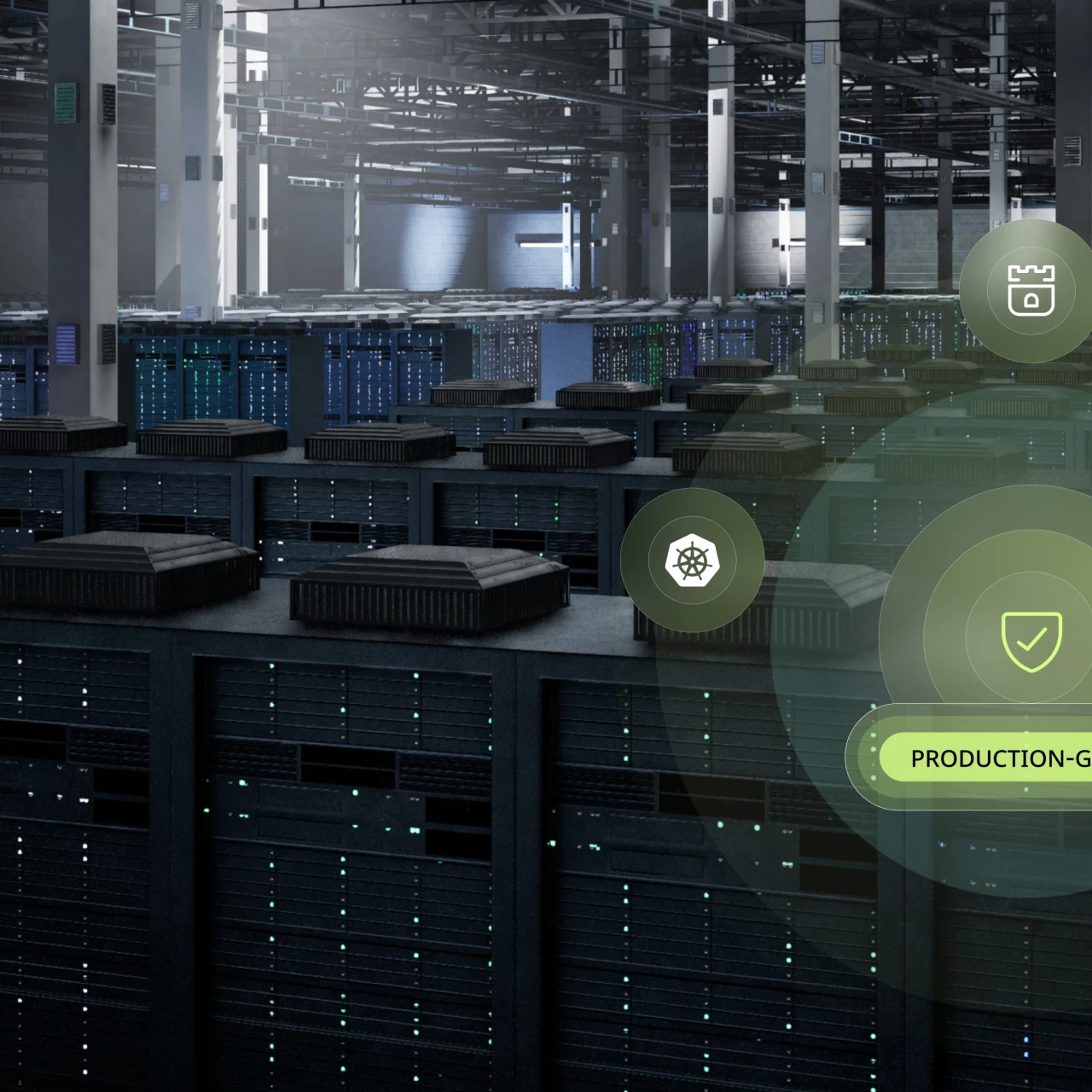
Rook is a Kubernetes-native storage orchestrator built on Ceph, unifying object, block, and file storage in a single platform.
CLYSO engineers Rook environments for modern, data-intensive workloads — designed for reliable lifecycle operations and full data control.
Running stateful workloads in Kubernetes is straightforward. Operating storage reliably at scale is considerably harder.
Upgrades, hardware changes, and mixed workloads often introduce unpredictable behavior, operational overhead, and performance risks — turning storage into the bottleneck of otherwise modern platforms.
CLYSO engineers Rook environments designed for stable Day-2 operations, so storage remains predictable as your platform evolves.
Rook combines Kubernetes-native automation with production-proven storage engineering, unifying data services into a scalable, lifecycle-ready platform.
Designed for predictable, low-touch storage operations.

One platform for all storage services.

Engineered for Day-2 reality, not just initial deployment.

Full control over data, access, and infrastructure decisions.
CLYSO engineers actively contribute to the cloud-native storage ecosystem. At KubeCon 2025, Deepika Upadhyay and Artem Torubarov introduced Rook and Ceph in a practical session designed to explain how Kubernetes-native storage works.
This video can only be displayed when you enable javascript for this website.
“This session is a great starting point for Rook. It covers the full spectrum — from core concepts to real-world operations.”— Deepika Upadhyay
CLYSO delivers Rook as an upstream-based, consulting-led solution. Engagements are structured into three tracks, allowing teams to enter at the stage that best matches their current maturity.
Assessment and architecture design for a Rook-managed Ceph platform aligned with your workloads.
Production deployment using GitOps principles, making storage reproducible and integrated into existing CI/CD workflows.
Operational guidance and hands-on enablement for confident production operations.
These are the questions organizations most commonly ask when evaluating Rook and Ceph for production Kubernetes environments.
Rook turns Ceph into a Kubernetes-native storage component, so storage can be managed like any other workload instead of through external systems or GUIs.
Traditional arrays rely on manual, ticket-driven processes. With Rook-managed Ceph, storage lives in YAML, integrates into GitOps workflows, and is reconciled automatically by Kubernetes.
Rook-managed Ceph runs in production environments ranging from smaller clusters to multi-petabyte deployments. Real-world examples include clusters with hundreds of nodes and thousands of OSDs, scaling across regions through a declarative, configuration-as-code approach.
Many teams start with new workloads on Rook-managed Ceph and migrate gradually, often running legacy and new systems in parallel during transition.
Typical challenges include non-disruptive upgrades, rebalancing and recovery storms, mixed workload performance, and hardware changes without downtime.
CLYSO provides reference architectures, production-proven operational patterns, and hands-on guidance for design, observability, and GitOps integration.
Active contributors to the Ceph ecosystem and members of leading open-source foundations.





Plan Your Rook Strategy with CLYSO
Whether you are evaluating Rook or preparing for production, we help teams design, implement, and operate storage that remains reliable at scale.